
Nigeria’s National Single Window Is Live: Building a Cyber-Resilient Digital Port Ecosystem
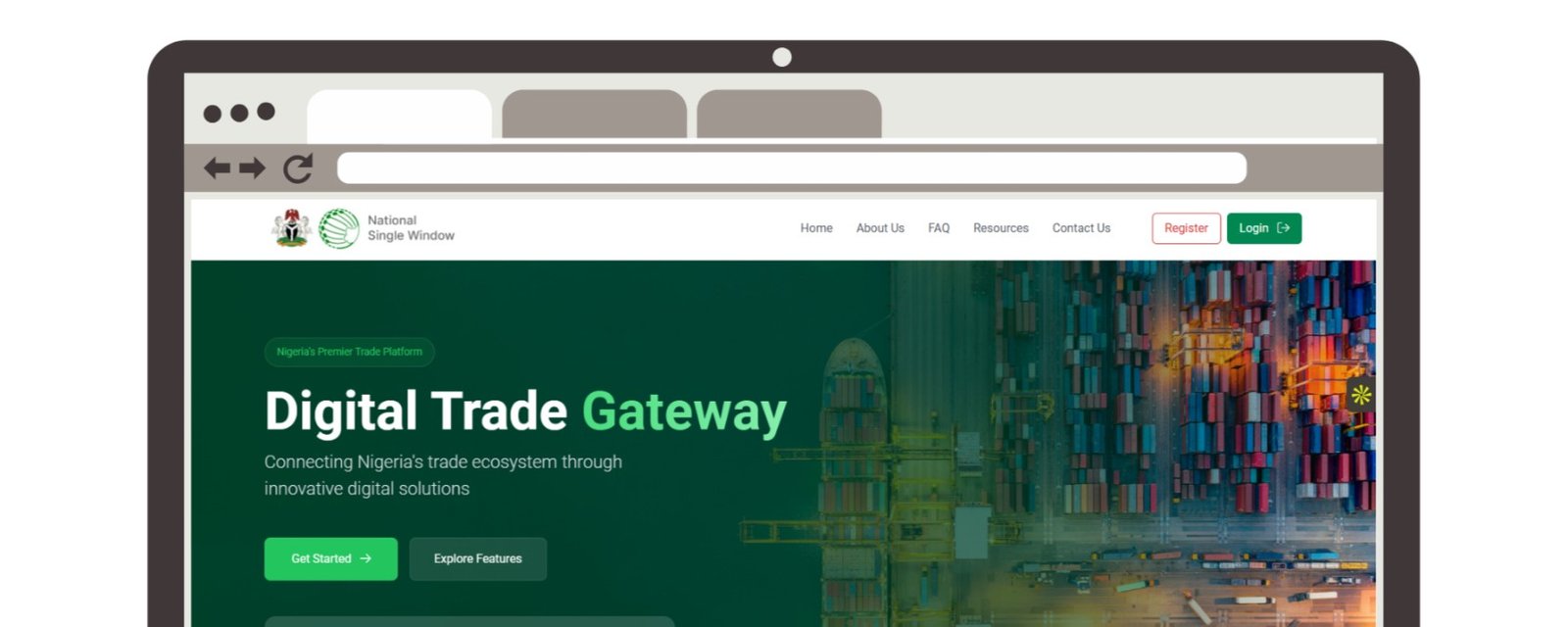
Nigerian Single Window Portal – visit
Nigeria’s National Single Window entered Phase One operations on 27 March 2026, creating a central digital channel for core trade processes. The launch is an important milestone, but it is not the end of the transformation. The larger test is whether Nigeria can build a connected, trusted and cyber-resilient digital ecosystem around the platform—one that works across customs, ports, shipping lines, terminal operators, regulators, banks and logistics providers.
The difference matters. Putting documents online can reduce paperwork. Connecting institutions through common data standards can reduce duplication. Redesigning processes around trusted, reusable data can change how quickly and predictably cargo moves.
For Nigeria, the National Single Window should therefore be treated as digital trade infrastructure, not simply as another government portal.
What changed when Phase One went live?
The Federal Government launched Phase One of the National Single Window on 27 March 2026. Before the launch, the Presidency said the first phase would support online processing of import permits, electronic submission of cargo manifests and centralised risk management. It also set out a “submit once” principle under which documents can be shared with relevant agencies without repeated submission.
The initial deployment was deliberately limited. Reuters reported that the first phase began with one port and one shipping line. That narrow scope is useful because it allows operators to test workflows, resolve integration problems and learn from real transactions before wider expansion.
However, a successful launch should not be confused with a completed transformation. The operational value of the platform will emerge only when users experience fewer duplicate submissions, faster decisions, clearer status visibility and more predictable cargo processing.
A National Single Window is not the same as a smart port
A National Single Window provides a central environment for traders and transport actors to submit information required by public authorities. A Maritime Single Window, in the International Maritime Organization’s framework, focuses more specifically on information required for the arrival, stay and departure of ships in port.
A Port Community System has a broader operational role. It can connect shipping lines, agents, terminal operators, customs, hauliers, freight forwarders, port authorities and other participants in the movement of vessels and cargo.
These systems can complement one another, but they are not interchangeable. Nigeria’s National Single Window will deliver its greatest maritime value when it can exchange reliable data with port community systems, terminal operating systems, customs platforms, payment systems and vessel-reporting infrastructure.
Without that integration, stakeholders may still move between separate portals, re-enter the same information and depend on manual interventions behind a digital interface.
Four tests for a resilient digital port ecosystem
1. Interoperability must be designed, not assumed
Digital platforms create value when systems can understand and reuse one another’s data. That requires shared definitions for vessels, voyages, cargo, permits, organisations, locations and regulatory decisions.
The IMO’s 2026 Strategy on Maritime Digitalization emphasises interoperability, system standardisation, data sharing and effective data governance. Its Compendium on Facilitation and Electronic Business also provides a reference model intended to support data exchange among Maritime Single Windows, Port Community Systems and other ship-port systems.
For Nigeria, the practical question is whether connected organisations use consistent identifiers and formats. If one agency records a vessel, consignee or cargo item differently from another, the platform may still depend on reconciliation by people. Common data models and secure application programming interfaces are therefore foundational infrastructure.
2. Cybersecurity must be built into operations
Greater connectivity increases the consequences of a security failure. A compromised account, malicious data change or unavailable platform could delay cargo, disrupt vessel clearance or weaken confidence in regulatory decisions.
The IMO Facilitation Committee approved draft measures in March 2026 that would require governments to implement cybersecurity protections for Maritime Single Windows in line with national legislation. The proposed amendments are expected to proceed through the IMO process before a planned 2029 entry into force.
Nigeria should not wait for that deadline. A resilient implementation should include strong identity and access management, multi-factor authentication, role-based permissions, encrypted data exchange, continuous monitoring, tested backups and incident-response arrangements. Connected vendors should also meet defined security requirements because an ecosystem is only as strong as its weakest trusted connection.
3. Data governance must create trust
A single window brings together commercially sensitive and regulatory information. Stakeholders need clear answers about who owns data, who may access it, how long it is retained, how errors are corrected and how decisions can be audited.
Data governance is not an administrative detail. It influences whether users trust the system enough to rely on it. Clear accountability also helps prevent conflicting records, unauthorised access and disputes over which version of a document or decision is authoritative.
Nigeria’s implementation should therefore define data stewardship for every major dataset, establish audit trails and provide transparent procedures for correcting inaccurate information.
4. Operational continuity must be measurable
Ports cannot stop because a digital service is unavailable. Business-continuity planning should cover power interruptions, connectivity failures, cyber incidents, software faults and failures in third-party services.
Fallback procedures are necessary, but they should not quietly recreate permanent paper processes. The better approach is to define recovery targets, test them regularly and monitor the availability of critical services.
Performance should also be measured through operational outcomes rather than the number of agencies connected. Useful indicators include average processing time, percentage of transactions completed without manual intervention, duplicate-data reduction, system availability, incident recovery time and user satisfaction.
What African implementation experience tells us
The challenge is not unique to Nigeria. A 2025 working paper from the Africa Transport Policy Program noted that many African countries remained at an early stage of Maritime Single Window implementation, with institutional, legal and operational barriers slowing progress.
This is an important warning against treating digitalisation as a software procurement exercise. Technology can expose unresolved institutional problems. Agencies may disagree over process ownership, data access or decision authority. Users may lack training. Connectivity and support capacity may vary between locations.
African port digitalisation therefore requires coordinated policy, stakeholder engagement, local technical capability and sustained operational support. Imported platforms can contribute, but they must be configured for local workflows, regulatory structures and infrastructure conditions.
A practical roadmap for Nigeria
Stabilise and measure the first deployment
The first priority should be reliable operation. Authorities and participating companies should document where users encounter delays, where data must be re-entered and where manual approvals remain necessary. Baseline measurements should be established before wider expansion.
Integrate the most valuable workflows
Expansion should prioritise connections that remove the most friction. These may include manifest processing, licences and permits, risk-management decisions, payments, terminal release instructions and status notifications.
Each integration should have a named owner, agreed data definitions, security requirements and a measurable service outcome.
Build resilience before adding complexity
Cybersecurity testing, backup restoration and business-continuity exercises should take place before the ecosystem becomes too complex to test effectively. Vendor access and system-to-system connections should be reviewed continuously rather than only during procurement.
Move from visibility to optimisation
Once reliable data begins to flow across the ecosystem, Nigeria can use it to improve planning. Port operators and regulators could identify recurring bottlenecks, predict workload, coordinate inspections and provide better information to cargo owners.
Advanced analytics and artificial intelligence may eventually support these functions, but they should follow—not replace—clean data, stable processes and clear accountability.
The opportunity for Nigerian maritime technology companies
The National Single Window creates opportunities beyond the core platform. Maritime organisations will need integration services, secure data exchanges, workflow automation, operational dashboards, mobile tools, analytics and technical support.
Nigerian technology firms understand local operating conditions, including connectivity constraints, fragmented workflows and the need for practical user support. That knowledge can help transform international standards into systems that work in African ports.
The objective should not be to reproduce foreign smart-port models without adaptation. It should be to build secure and maintainable solutions from Africa, for Africa to the world.
Frequently asked questions
What is Nigeria’s National Single Window?
It is a central digital environment designed to streamline the submission and processing of information required for imports, exports and other trade procedures. Phase One went live on 27 March 2026.
Is the National Single Window the same as a Maritime Single Window?
No. A National Single Window covers broader trade and regulatory procedures. A Maritime Single Window focuses on information exchanged between ships and public authorities for vessel arrival, stay and departure. The systems can be integrated.
How can the platform improve Nigerian port operations?
It can reduce repeated submissions, improve information sharing, accelerate regulatory decisions and provide clearer status visibility. These benefits depend on effective integration and process redesign.
What are the main cybersecurity risks?
Key risks include compromised accounts, ransomware, unavailable systems, insecure third-party connections and unauthorised changes to cargo or regulatory data.
What should Nigeria prioritise next?
Priorities should include stable operations, common data standards, secure integrations, clear data governance, user training, measurable performance and tested continuity plans.
Building the next layer of maritime infrastructure
Nigeria’s National Single Window is a major step towards modern trade administration. Its long-term impact will depend less on the launch event than on the quality of the ecosystem built around it.
The strongest outcome would be a platform that allows information to be submitted once, exchanged securely, trusted by every participant and used to make port operations more predictable. Achieving that outcome requires technology, but also governance, operational discipline and collaboration.
AD Marina helps maritime organisations design practical digital solutions for African operating environments—from workflow automation and systems integration to secure maritime data platforms. Contact AD Marina to discuss how connected technology can improve visibility, coordination and operational resilience.
Related AD Marina insights
- Maritime Trends 2026: Seven Forces Reshaping Shipping and Ports in Africa
- The Software-Defined Ship: Why the Future of Shipping Will Be Coded
- How Digitalisation Is Changing Ship Chartering
Sources
- The State House, Abuja: National Single Window launch announcement
- The State House, Abuja: confirmation of the 27 March 2026 launch
- International Maritime Organization: digitalization strategy and cybersecurity measures
- International Maritime Organization: Maritime Single Window guidance
- Africa Transport Policy Program: Catching up on Digital Port Infrastructure for Africa

