
Why Better Technology Doesn't Always Make Ships Safer: The Human Factors Challenge in Autonomous Shipping
Introduction
For decades, the maritime industry has measured progress by the sophistication of its technology.
Ships have become larger, faster, more fuel efficient, and increasingly intelligent. Modern bridges now integrate radar, ECDIS, AIS, GPS, satellite communications, engine monitoring systems, weather routing software, voyage optimization platforms, and AI-assisted navigation into a single operational environment.
On paper, this should make ships significantly safer.
Yet, recent research suggests a surprising reality.
Better technology does not automatically create safer ships.
In fact, when automation, digital interfaces, and decision-support systems are poorly designed around the people expected to use them, they can increase operational risk instead of reducing it.
This is one of the central findings highlighted in recent research by the Ocean Autonomy Cluster on future ship bridge design. The research argues that the next generation of maritime innovation should not simply focus on building smarter autonomous systems—it should focus on designing technology around human cognitive capabilities.
That distinction may determine whether autonomous shipping becomes one of the safest transformations in maritime history or one of its greatest operational challenges.
The Digital Revolution on Modern Ship Bridges
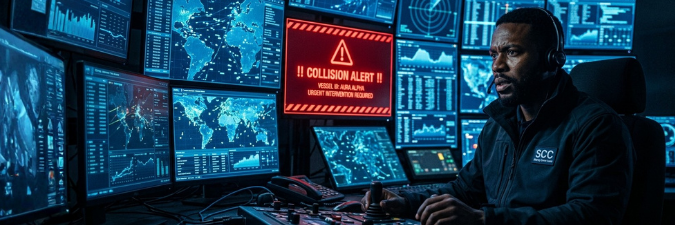
Walk onto the bridge of a modern commercial vessel today and it looks dramatically different from bridges built just two decades ago.
Instead of relying primarily on paper charts, magnetic compasses and visual navigation, officers now interact with multiple digital systems simultaneously.
A modern integrated bridge typically includes:
- Electronic Chart Display and Information Systems (ECDIS)
- Automatic Identification System (AIS)
- Multiple radar systems
- GPS positioning
- Dynamic weather routing
- Engine monitoring dashboards
- Voyage optimization software
- Alarm management systems
- Satellite communication terminals
- CCTV monitoring
- Electronic checklists
- Decision support software
Each of these technologies was introduced with one objective:
Improve navigational safety.
Individually, they achieve that goal remarkably well.
Collectively, however, they introduce a new challenge that many maritime organizations are only beginning to understand.
Information overload.
When More Information Becomes Less Useful
One common assumption in technology is that giving operators more information automatically improves decision-making.
Human psychology tells us otherwise.
The human brain has finite cognitive capacity.
When navigators are forced to monitor dozens of displays, alarms, notifications and decision-support systems simultaneously, their ability to identify what is genuinely important begins to decline.
This phenomenon is known as cognitive overload.
Rather than helping operators make faster decisions, excessive information can slow decision-making, increase stress, and reduce situational awareness.
Imagine driving a car while simultaneously monitoring:
- five navigation screens,
- two radios,
- weather updates,
- engine diagnostics,
- collision warnings,
- phone notifications,
- and traffic cameras.
Eventually, the issue is no longer a lack of information.
It is the inability to prioritise it.
Modern ship bridges increasingly face this same challenge.
The Hidden Threat: Alarm Fatigue
Perhaps one of the most overlooked human factors in maritime operations is alarm fatigue.
Modern vessels generate hundreds of alarms.
These may relate to:
- engine performance,
- steering systems,
- navigation,
- machinery,
- environmental monitoring,
- cargo operations,
- communications,
- safety equipment.
Many alarms are routine.
Some require immediate action.
The difficulty lies in distinguishing between the two.
Research across high-risk industries—including aviation, healthcare, nuclear energy, and maritime operations—has consistently shown that excessive alarms reduce operator responsiveness.
When personnel are exposed to continuous alerts, they gradually become desensitized.
The consequence is dangerous:
The one alarm that truly matters may receive delayed attention.
Alarm fatigue has already become a recognised challenge across several industries.
Shipping is now experiencing similar concerns as bridge systems become increasingly digital.
Lessons from the Royal Majesty Grounding
One of the most cited examples of automation complacency occurred in 1995 when the cruise ship MV Royal Majesty grounded near Nantucket, Massachusetts.
The vessel had been operating under GPS navigation.
Unknown to the bridge team, the GPS receiver lost its satellite signal.
The navigation system silently switched to dead reckoning mode.
Because the displayed position appeared believable, officers continued trusting the system without adequately cross-checking other navigational methods.
The result was a navigational error of approximately 17 nautical miles.
The vessel eventually grounded despite carrying experienced officers and multiple navigation systems.
The investigation concluded that the primary failure was not technological.
It was human reliance on automation.
The incident remains one of the maritime industry’s most important lessons:
Technology should support professional judgement—not replace it.
Automation Is Not the Enemy
It is important to make one point absolutely clear.
Automation itself is not dangerous.
Modern navigation systems have prevented countless accidents.
Electronic charts have dramatically improved voyage planning.
AIS has significantly enhanced traffic awareness.
Dynamic positioning systems enable offshore operations that would have been nearly impossible a generation ago.
Artificial intelligence is already helping optimize routes, reduce fuel consumption, identify collision risks, and improve predictive maintenance.
The challenge is not automation.
The challenge is designing automation that works with people rather than around them.
This philosophy is known as human-centered design.
Instead of asking:
“What can technology automate?”
Human-centered engineering asks:
“How can technology make human decision-makers better?”
That subtle difference is becoming one of the defining principles behind the future of autonomous shipping.
What Is Human-Centered Design?
Human-centered design places the operator at the centre of technological development.
Rather than forcing navigators to adapt to increasingly complex systems, designers develop systems that adapt to human capabilities and limitations.
Good bridge design considers:
- cognitive workload,
- visual ergonomics,
- information prioritisation,
- intuitive interfaces,
- decision support,
- fatigue,
- stress,
- teamwork,
- situational awareness.
The objective is not simply operational efficiency.
It is safer decision-making under pressure.
This principle has transformed aviation over the past three decades.
Increasingly, maritime technology is following the same path.
AD Marina Insight
For years, the conversation around autonomous shipping has focused on one question:
“How quickly can ships become autonomous?”
We believe there is a better question.
“How well are we designing technology for the humans who will continue supervising autonomous systems?”
The future bridge may contain fewer people.
But those people will make more important decisions than ever before.
Technology will continue evolving.
Human cognition will not evolve at the same pace.
The organisations that understand this balance earliest will be the ones that lead the next generation of maritime innovation.
The Five Human Factors Every Autonomous Ship Must Solve
Autonomous shipping is often presented as a technological challenge.
In reality, it is equally a human factors challenge.
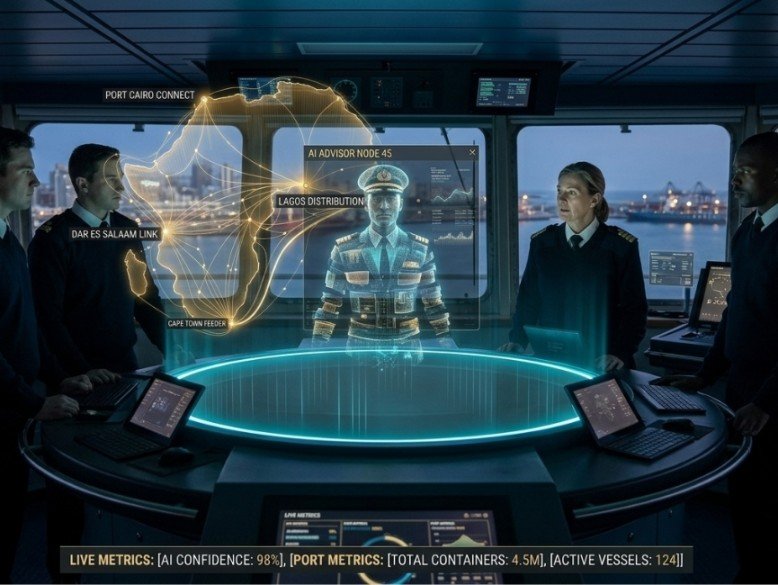
No matter how advanced artificial intelligence becomes, autonomous vessels will continue to rely on human operators, engineers, regulators, pilots, and shore-based control centres. The question is no longer whether people will remain involved—it is how technology can help them make better decisions.
To achieve that, future autonomous systems must solve five critical human-centered challenges.
1. Maintaining Situational Awareness
Situational awareness is a navigator’s ability to understand what is happening around the vessel, anticipate what may happen next, and make timely decisions.
Traditional navigation naturally encourages this awareness because officers continuously observe the sea, weather, nearby vessels, engine performance, and communications.
Automation changes that relationship.
As more tasks become automated, operators may become passive supervisors rather than active navigators.
Psychologists refer to this as the Out-of-the-Loop Performance Problem—a condition where humans monitor automated systems for long periods but struggle to intervene effectively when something unexpected occurs.
In autonomous shipping, this becomes even more important.
If shore-based operators supervise several vessels simultaneously, maintaining situational awareness across multiple operations becomes significantly more challenging.
Future bridge systems must therefore do more than display information.
They must actively help operators understand:
- What is happening?
- Why is it happening?
- What is likely to happen next?
Good technology answers all three questions.
2. Preventing Automation Complacency
Humans naturally trust technology—especially when it consistently performs well.
This is beneficial until the technology encounters a situation it cannot manage.
History shows that many transportation accidents occur not because automation failed, but because humans trusted it too much.
The aviation industry has experienced similar challenges with highly automated aircraft.
Pilots have occasionally become overly dependent on automation, reducing manual flying skills and delaying intervention during abnormal situations.
Shipping faces comparable risks.
As AI-assisted navigation becomes more capable, bridge teams may begin assuming that “the system has already seen it.”
That assumption can be dangerous.
Autonomous navigation should never eliminate critical thinking.
It should enhance it.
The best systems continuously encourage operators to remain mentally engaged instead of becoming passive observers.
3. Reducing Cognitive Load
Modern bridge systems provide unprecedented amounts of operational information.
The problem is not data availability.
The problem is information prioritisation.
Imagine a navigator receiving:
- radar alerts,
- AIS updates,
- weather routing changes,
- machinery alarms,
- engine diagnostics,
- cybersecurity notifications,
- communication requests,
- electronic chart warnings,
all within a few minutes.
Every notification competes for attention.
Research in human factors consistently demonstrates that decision quality declines when cognitive workload exceeds human processing capacity.
Future autonomous systems must therefore become intelligent filters—not simply information providers.
Artificial intelligence should answer questions such as:
- Which information requires immediate action?
- Which alert can safely wait?
- Which events are related?
- Which notification poses the greatest operational risk?
Instead of producing more data, AI should reduce complexity.
4. Designing Better Human-Machine Interfaces
Technology is only as effective as its interface.
Many bridge systems today have been developed independently by different manufacturers.
Although integration has improved significantly, officers may still navigate between multiple displays, inconsistent menus, different alarm philosophies, and varying operating procedures.
Poor interface design increases:
- workload,
- fatigue,
- reaction time,
- training requirements,
- operational errors.
Human-centered bridge design focuses on creating intuitive systems that minimise unnecessary interaction.
A well-designed interface should make critical information immediately visible without requiring operators to search through multiple screens.
The objective is simple:
Reduce the time between seeing information and making the correct decision.
5. Supporting Human Decision-Making
Perhaps the greatest misconception surrounding artificial intelligence is that it replaces human judgement.
In reality, the strongest AI systems are those that strengthen it.
Decision-support systems should help bridge teams by:
- identifying collision risks,
- analysing weather trends,
- recommending fuel-efficient routes,
- highlighting abnormal vessel behaviour,
- prioritising navigational hazards.
However, the final operational decision often remains a human responsibility.
This concept—sometimes called Human-on-the-Loop—is becoming increasingly important within autonomous shipping.
Rather than removing people entirely, future vessels will likely rely on continuous collaboration between humans and intelligent systems.
The Rise of Remote Operations Centres
One of the most significant developments in autonomous shipping is the emergence of Remote Operations Centres (ROCs).
Instead of controlling a single vessel from onboard, operators monitor ships from land-based facilities equipped with:
- live navigation feeds,
- weather intelligence,
- machinery diagnostics,
- satellite communications,
- AI-assisted decision systems,
- cybersecurity monitoring.
Several maritime technology companies have already demonstrated successful remote vessel operations in controlled environments.
As autonomy increases, these centres may supervise multiple vessels simultaneously.
This creates tremendous opportunities for operational efficiency.
It also introduces new human factors questions.
Can one operator effectively monitor five vessels?
Ten?
Twenty?
How should interfaces change when supervising an entire fleet rather than a single bridge?
These are questions that technology alone cannot answer.
They require human-centered engineering.
Aviation Has Already Been Here
Shipping is not the first industry to confront these challenges.
Commercial aviation underwent a similar transformation decades ago.
Modern aircraft are capable of performing large portions of flight automatically.
Yet airlines continue investing heavily in:
- crew resource management,
- simulator training,
- human factors engineering,
- fatigue management,
- cockpit ergonomics.
Why?
Because automation reduced manual workload.
It did not eliminate human responsibility.
Maritime shipping now stands at a similar crossroads.
The lessons aviation has already learned can help prevent repeating costly mistakes at sea.
Human-Centered Design Is Becoming a Competitive Advantage
Traditionally, shipping companies competed through:
- larger fleets,
- lower operating costs,
- fuel efficiency,
- vessel performance.
Increasingly, another factor is emerging.
Operational usability.
The companies that successfully integrate AI, automation, and human-centered design are likely to experience:
- fewer operational incidents,
- faster decision-making,
- lower training costs,
- higher crew confidence,
- stronger regulatory compliance.
In other words, good human-centered design is no longer just a safety issue.
It is becoming a business advantage.
AD Marina Perspective
The future of shipping will not be determined by who builds the smartest autonomous vessel.
It will be determined by who builds the smartest relationship between humans and technology.
Autonomous shipping is not replacing people.
It is redefining their role.
As artificial intelligence assumes more routine operational tasks, human expertise becomes even more valuable—not less.
The bridge officer of tomorrow may interact with fewer manual controls.
But they will oversee more complex systems, interpret more data, and make decisions with greater strategic impact than any generation before them.
Technology may steer the vessel.
People will continue to shape the voyage.
In the next and final part, we’ll examine what this means for Africa’s maritime future, the regulatory landscape, and why maritime organisations should begin preparing today rather than waiting for fully autonomous ships to become commonplace.
What This Means for Africa's Maritime Industry
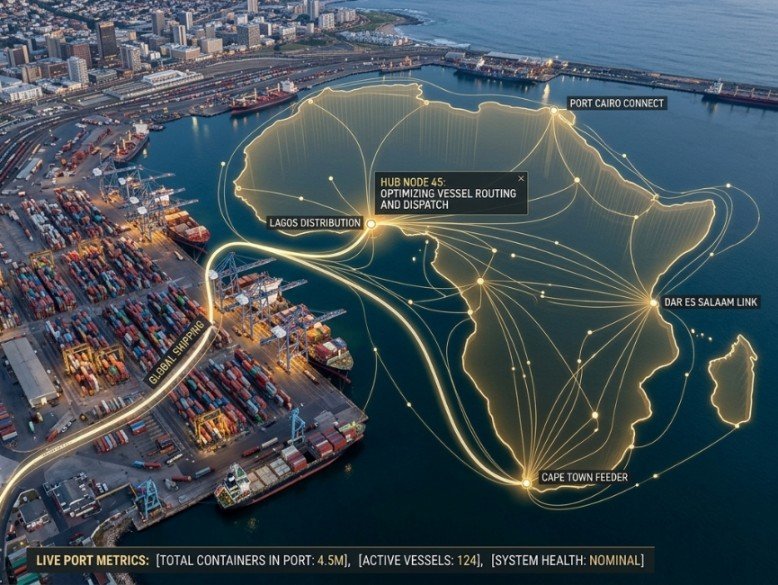
While much of the conversation around autonomous shipping has focused on Europe and Asia, Africa should not view this technological transition as a distant development.
The decisions being made today will shape the competitiveness of African ports, shipping companies, maritime academies, and regulators for decades.
The question is no longer whether autonomous technologies will influence African shipping.
The question is whether Africa will be ready when they do.
With over 90% of Africa’s imports and exports by volume transported by sea, maritime transport remains the backbone of the continent’s international trade. As global shipping companies adopt more digital operations, ports and coastal states that cannot support these technologies risk becoming less attractive destinations for modern fleets.
This is particularly relevant for major maritime economies such as Nigeria, South Africa, Egypt, Morocco, Kenya and Ghana.
Why Nigeria Should Pay Attention
Nigeria is home to one of Africa’s busiest maritime sectors.
The ports of Lagos, Onne, Tin Can Island, Calabar and Warri handle millions of tonnes of cargo annually while serving as strategic gateways for West Africa.
Yet the future competitiveness of these ports will depend on more than physical infrastructure.
Increasingly, competitiveness will be determined by digital capability.
Questions Nigerian stakeholders should already be asking include:
- Can our ports communicate seamlessly with autonomous vessels?
- Are our Vessel Traffic Services (VTS) prepared for AI-assisted navigation?
- Are maritime academies teaching digital bridge operations?
- Do future officers understand AI-assisted decision-making?
- Are cybersecurity standards keeping pace with vessel digitalisation?
Autonomous shipping will not suddenly arrive at Nigerian ports one morning.
It will arrive gradually.
Every investment made today in digital infrastructure, cybersecurity, connectivity and human capital determines how prepared the industry will be tomorrow.
Maritime Education Must Evolve
Perhaps no area requires greater transformation than maritime education.
Today’s cadets are preparing for careers that will look significantly different from those of today’s captains.
Future officers may spend less time manually plotting positions and more time supervising intelligent navigation systems.
Training institutions should begin expanding their curricula to include:
- Human factors engineering
- AI-assisted navigation
- Integrated bridge systems
- Maritime cybersecurity
- Remote operations
- Data analytics
- Digital decision support
- Human-machine collaboration
Technical competence alone will no longer define an excellent navigator.
Digital competence will become equally important.
The Opportunity for African Maritime Technology Companies
This transformation also presents enormous opportunities.
The future of autonomous shipping will require far more than autonomous vessels.
It will require:
- Bridge software
- Decision support platforms
- Cybersecurity systems
- Fleet analytics
- Remote operations software
- Training simulators
- Human factors research
- Digital compliance tools
Many of these technologies do not need to be imported.
African innovators have an opportunity to build solutions tailored to African ports, regulations and operational realities.
The next globally recognised maritime technology company does not have to emerge from Europe or Asia.
It could emerge from Africa.
AD Marina Insight
At AD Marina, we believe the future of shipping will not be defined by who builds the smartest artificial intelligence.
It will be defined by who builds technology that people can trust.
Artificial intelligence should never compete with human expertise.
It should amplify it.
The bridge of the future should not become more complicated.
It should become more intuitive.
The navigator should not become less important.
They should become better informed.
Technology should reduce cognitive burden—not increase it.
Automation should improve judgement—not replace it.
That is the true promise of human-centered maritime innovation.
AD Marina Insight
The maritime industry stands at one of the most significant technological turning points since the introduction of satellite navigation.
Artificial intelligence, autonomous vessels, predictive analytics and remote operations are rapidly changing how ships are designed and operated.
These innovations promise safer, cleaner and more efficient shipping.
However, technology alone does not guarantee safety.
History has repeatedly shown that accidents rarely occur because technology exists.
They occur when technology is poorly integrated into human decision-making.
The future bridge will almost certainly contain more software than switches.
More algorithms than paper charts.
More data than any navigator has ever processed before.
Yet one constant remains.
Every autonomous system is ultimately designed, monitored, regulated and trusted by people.
That is why the future of shipping is not simply about autonomous vessels.
It is about designing systems where humans and intelligent technologies perform better together than either could alone.
As autonomous shipping continues to evolve, organisations that invest in human-centered design today will likely become tomorrow’s industry leaders.
The question is no longer whether autonomous shipping is coming.
It already is.
The real question is whether we are designing it around the people who will make it successful.
Key Takeaways
✅ Better technology does not automatically create safer ships.
✅ Human factors engineering is becoming as important as artificial intelligence.
✅ Alarm fatigue and cognitive overload are emerging operational risks.
✅ Future bridge systems must support human decision-making rather than replace it.
✅ Maritime education must evolve to prepare officers for AI-assisted operations.
✅ Africa has an opportunity to become a contributor—not just a consumer—of maritime technology.
Frequently Asked Questions
What are human factors in shipping?
Human factors refer to how people interact with ships, technology, procedures and their working environment. They include workload, fatigue, decision-making, communication, situational awareness and interface design.
Why is human-centered design important in autonomous shipping?
Human-centered design ensures autonomous technologies support human operators instead of increasing complexity, reducing situational awareness or creating unnecessary workload.
Can automation make ships less safe?
Automation generally improves safety when properly designed. However, poorly designed interfaces, excessive alarms and overreliance on automation can introduce new operational risks.
What is alarm fatigue?
Alarm fatigue occurs when operators are exposed to frequent alerts and gradually become less responsive, increasing the risk that critical alarms are overlooked.
What is cognitive overload?
Cognitive overload happens when operators receive more information than they can effectively process, reducing decision quality and situational awareness.
Will autonomous ships eliminate captains?
Current industry developments suggest captains and maritime professionals will remain essential. Their roles are expected to evolve from manual control toward supervision, decision-making and remote operations.
What is a Remote Operations Centre?
A Remote Operations Centre (ROC) is a land-based facility where operators monitor and support vessel operations using real-time data, communications and decision-support systems.
Why should African maritime stakeholders care?
As global shipping becomes increasingly digital, African ports, regulators and shipping companies that invest in digital infrastructure and workforce development will be better positioned to remain competitive.
Final Thought
The future of shipping will not belong to the companies with the most automation. It will belong to the companies that best understand the people using it.
About AD Marina
AD Marina is a maritime technology company focused on digital transformation, artificial intelligence, maritime innovation and operational intelligence for the global shipping industry. Through research, technology and data-driven insights, we help shape conversations about the future of maritime operations.
About AD Marina
AD Marina is a maritime technology company focused on digital transformation, artificial intelligence, maritime innovation and operational intelligence for the global shipping industry. Through research, technology and data-driven insights, we help shape conversations about the future of maritime operations.