
IMO Adopts World’s First International Code for Autonomous Ships - What It Means for Maritime Technology
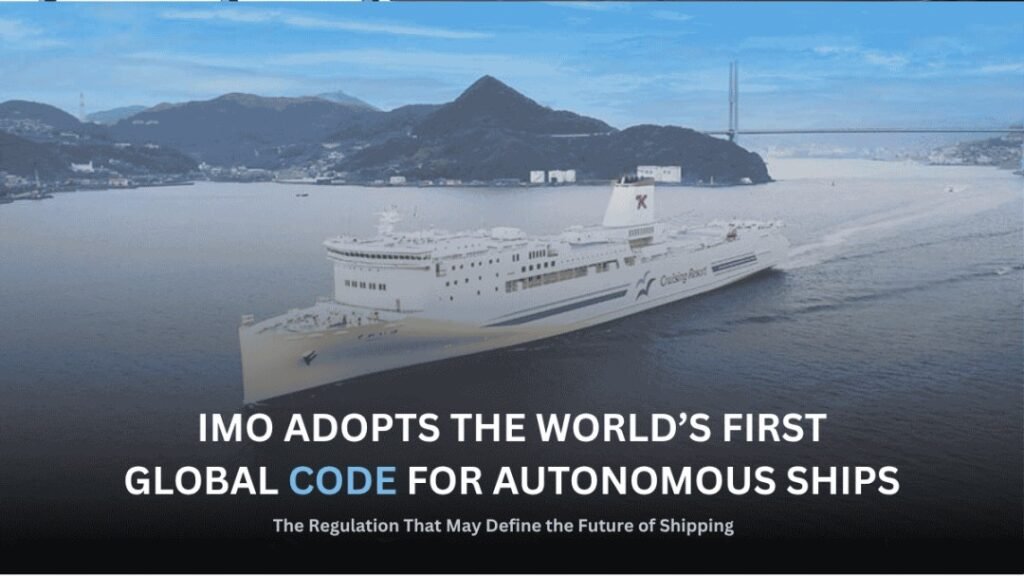
Introduction — The Future of Passenger Shipping Is Here
Everyone gets excited when a new autonomous vessel launches.
But that isn’t what changes industries.
Regulation does.
This week, the International Maritime Organization adopted the world’s first international safety framework for autonomous ships: the Maritime Autonomous Surface Ships (MASS) Code.
And that may become one of the most important maritime technology moments of this decade.
Because for the first time:
The shipping industry now has a global framework preparing commercial shipping for autonomy.
That changes everything.
What Actually Happened?
At the 111th session of the Maritime Safety Committee (MSC 111), the IMO formally adopted the first global MASS Code.
The code:
- Applies initially to large internationally trading cargo ships
- Takes effect 1 July 2026
- Starts as voluntary implementation
- Creates the pathway toward mandatory adoption under SOLAS later
The Five Technology Layers MASS Quietly Standardises
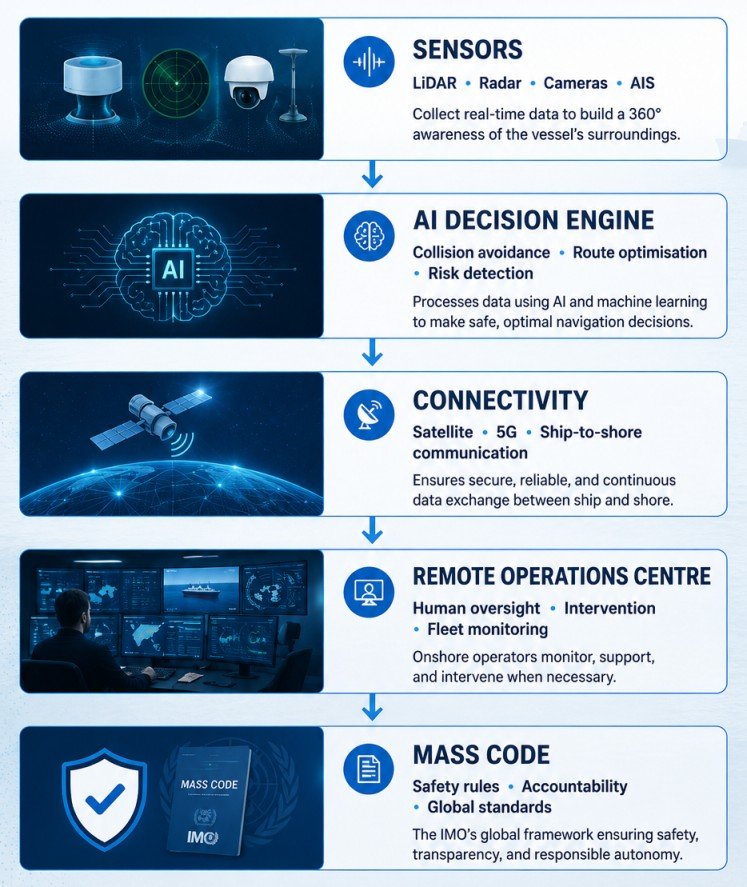
| Layer | Technology |
|---|---|
| Perception | Sensors, cameras, LiDAR |
| Decision | AI and navigation logic |
| Connectivity | Ship ↔ Shore communication |
| Operations | Remote control centres |
| Governance | Human override + accountability |
Autonomous Shipping is not a technology, It s a connected operating System.
This matters because autonomous shipping is not replacing people.
It’s redistributing decision-making.
MASS by the Numbers
Global Framework
First international code for autonomous ships.
Voluntary Implementation
The MASS Code begins voluntary application and creates the pathway toward future mandatory adoption.
Operating Model
Autonomous shipping relies on connected intelligence systems powered by AI, sensors and shore control.
Industry Transformation
Future vessel design, training, operations and regulation will evolve around autonomous capabilities.
The Quiet Revolution Hidden Inside the MASS Code
What makes this adoption powerful is not autonomy itself.
It’s what the code covers.
According to IMO documentation, MASS includes requirements around:
- System design
- Software principles
- Connectivity
- Risk assessment
- Alert management
- Remote operations
- Software Reliability
- Manning and training
- Safety of navigation
- Cybersecurity
- Search and rescue
- Machinery and electrical systems
Read that list again.
This isn’t a navigation update.
This is a technology operating model for shipping.
Why This Matters (From a Maritime Technology Perspective)
People think autonomous ships are simply:
“No captain onboard.”
That’s not autonomy.
Autonomy is system architecture.
The MASS Code creates rules around the technology stack powering future ships.
Roadmap to Autonomous Shipping
Key Milestones in the IMO MASS Code journey
MASS Regulatory Scoping Completed
IMO completes the first regulatory scoping exercise for Maritime Autonomous Surface Ships (MASS).
MASS Code Development Advances
Member States continue building the world's first international autonomous shipping framework.
First Global MASS Code Adopted
IMO adopts the world's first international code for autonomous ships.
Voluntary MASS Code Begins
Autonomous operations begin under voluntary implementation.
Future Mandatory Adoption
The roadmap moves toward mandatory autonomous shipping requirements.
Why This Changes Maritime Economics
Traditional Shipping:

Future Shipping:

Implications:
- Lower operational friction
- More vessel data
- Faster decisions
- More predictive operations
- Better scalability
This could reshape:
- ferry operations
- coastal logistics
- short-sea shipping
- port connectivity
- fleet management
What This Means for Africa
For African maritime stakeholders, this is not something to watch from the sidelines.
Ports.
Regulators.
Training institutions.
Shipowners.
Technology companies.
Everyone should already be asking:
Are our digital maritime systems ready?
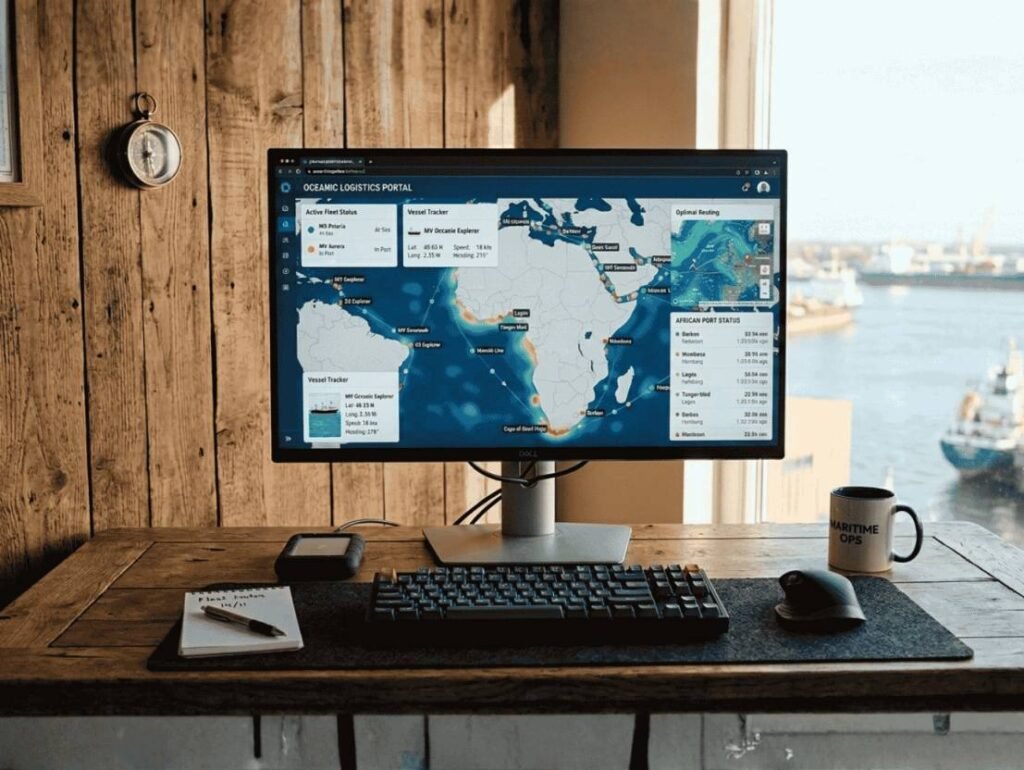
Because autonomous shipping doesn’t begin with autonomous vessels. It begins with:
Digital infrastructure
Connectivity
Operational Visibility
Regulatory readiness
AD Marina’s Take
The biggest shipping innovation of 2026 may not be a vessel. It may be the moment regulation finally caught up with technology.
The MASS Code signals something bigger:
Shipping is becoming software-defined. And maritime organisations that begin preparing now will have the advantage later.
Autonomy has entered the rulebook.
The next question is:
Who will be ready? – Take the AD Marinas Readiness test